

On May 21st 2026, we hosted our 10th Embedded Finance Review Event in Frankfurt at TechQuartier, as part of the TQ Digital Finance Accelerator. The evening brought together the third accelerator cohort and the wider Frankfurt fintech and banking community, with a stage programme focused on two of the harder problems in the space.
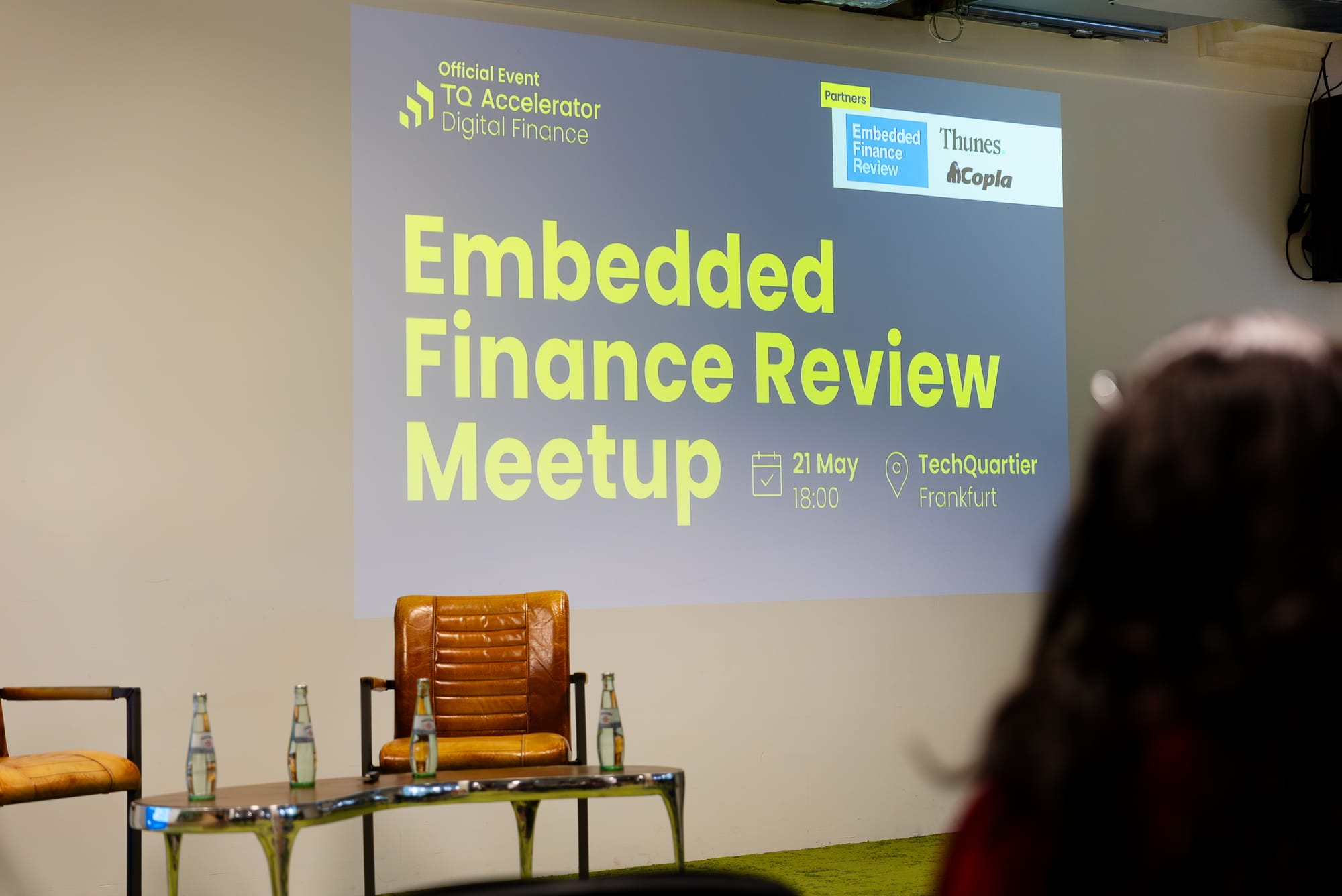
👏 A big thank you to our sponsors Thunes and Copla, and to the TechQuartier team for making the day and the evening possible.
Compliance for Fintech Builders with Gijs Bos from Copla
Compliance in financial services often gets framed as a cost or a brake on the business. Gijs Bos from Copla opened the fireside with a different framing: compliance is what makes it possible to build and adopt financial products in the first place. The harder point, and the one most companies still underestimate, is that compliance isn't a one-off exercise. It has to be maintained continuously, especially in product and technology, where every shipped change has a compliance implication that someone needs to be tracking. The institutions getting it right are the ones where compliance and engineering finally sit at the same table, instead of two floors apart.
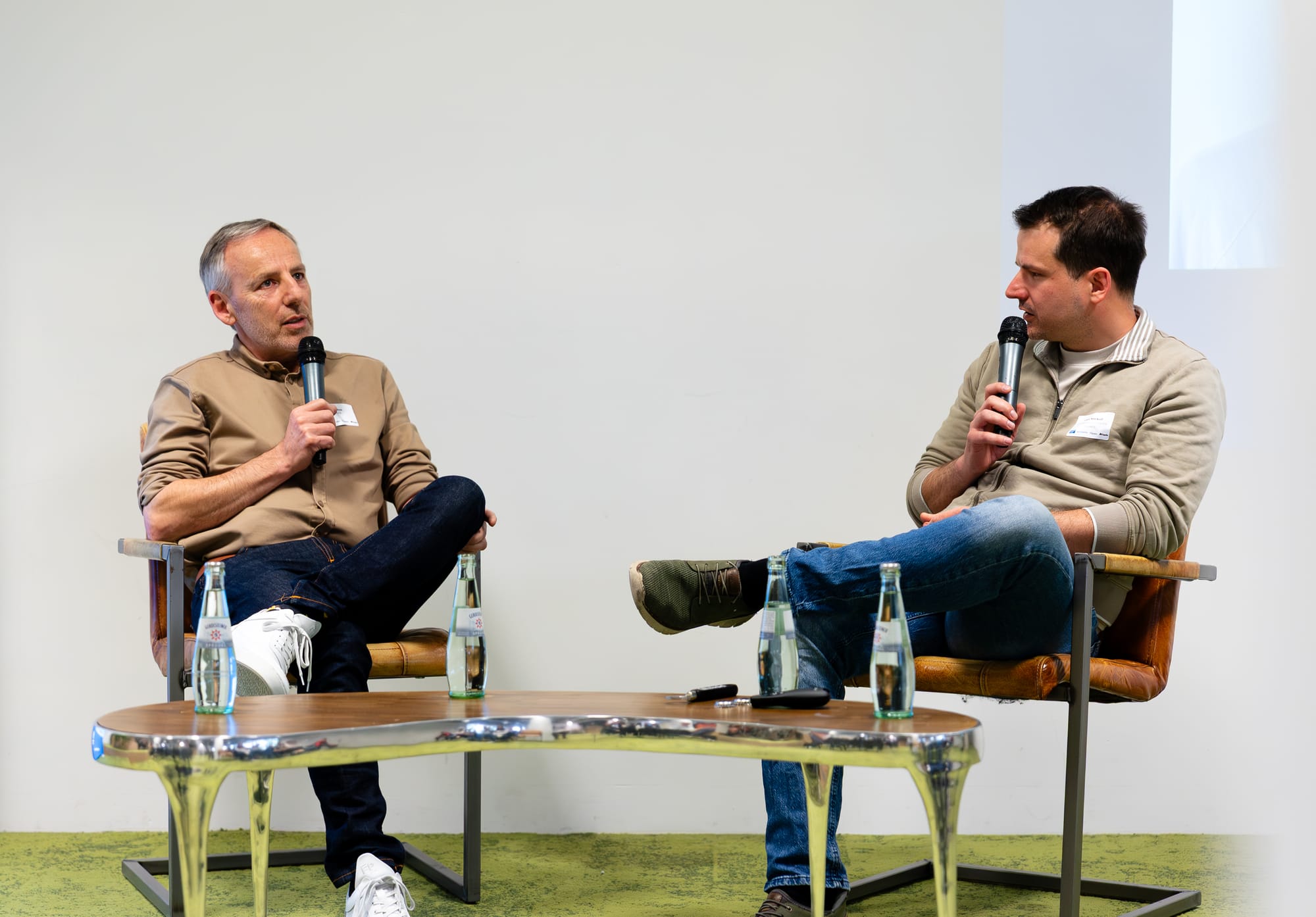
On AI, Gijs took both sides. Within compliance work itself, AI is a real force multiplier for the document-heavy parts: mapping one control set across multiple frameworks, reading SOC 2 reports and DPAs, and drafting responses to inbound security questionnaires. But the principle holds firm: AI does the reading and the drafting, humans do the deciding and the signing. On the other hand, when fintechs integrate AI into their core products, regulators aren't asking for perfect models. They're asking for a documented evaluation process, versioning and drift monitoring, and AI-specific incident protocols. Show your work, and you're 80% of the way there.
Looking ahead, his prediction for the regulatory headline this room should be watching for in 2027: the first DORA sanction with a public name attached. Not the biggest fine, the most embarrassing one. Until there's a named institution on the front page, most boards in Europe treat DORA as a budget conversation. The morning after, every board asks its compliance lead the same question: are we next?
Cross-Border Payments with Abigail Slater from Thunes
Sending money from a bank account in Germany to a mobile wallet abroad sounds like a solved problem in 2026. It isn't. Germany sends roughly €22 billion in remittances every year, much of it from migrant communities back home to countries where recipients don't have bank accounts but do have wallets like M-Pesa, bKash, or GCash. The current account sits at the start of that journey, but the bank can't reach the wallet at the other end, so the money has to detour through a money transfer operator. Customer trust, the funding relationship, and the daily banking app remain with the bank, while the value of the transaction leaks to a third party that owns the last mile. Abigail Slater from Thunes walked us through why that gap has been so stubborn, and what changes when banks can route directly into wallets without leaving their own rails.
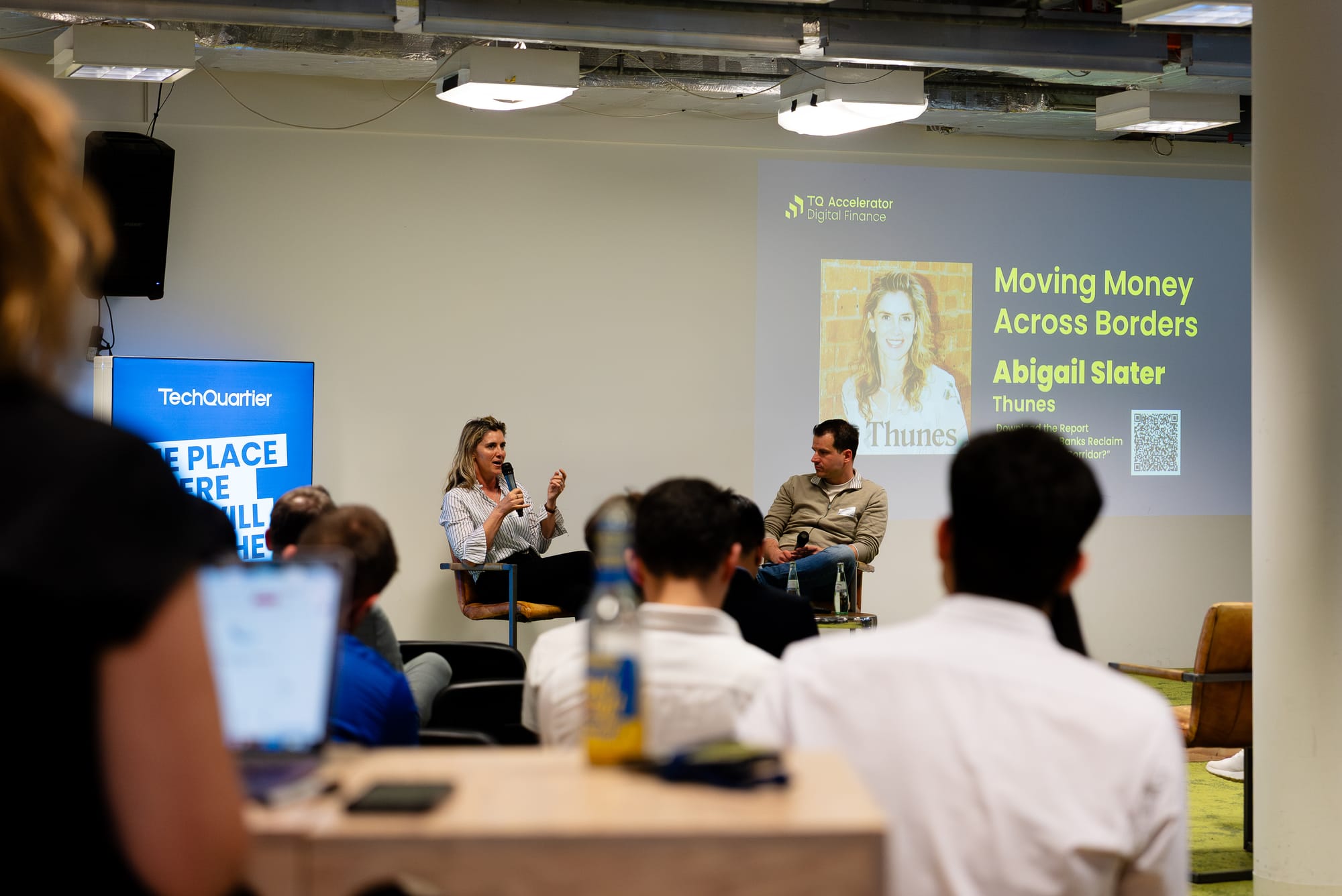
We also touched on SME payments, where the same interoperability challenges show up in a different form: businesses operating across corridors absorb costs and delays whenever their infrastructure choices haven't kept pace with where their customers and suppliers actually are. The honest takeaway for embedded finance builders is that cross-border isn't a feature you bolt on at the end. It's an infrastructure decision that quietly sets the ceiling on where you can credibly offer financial services in the first place.
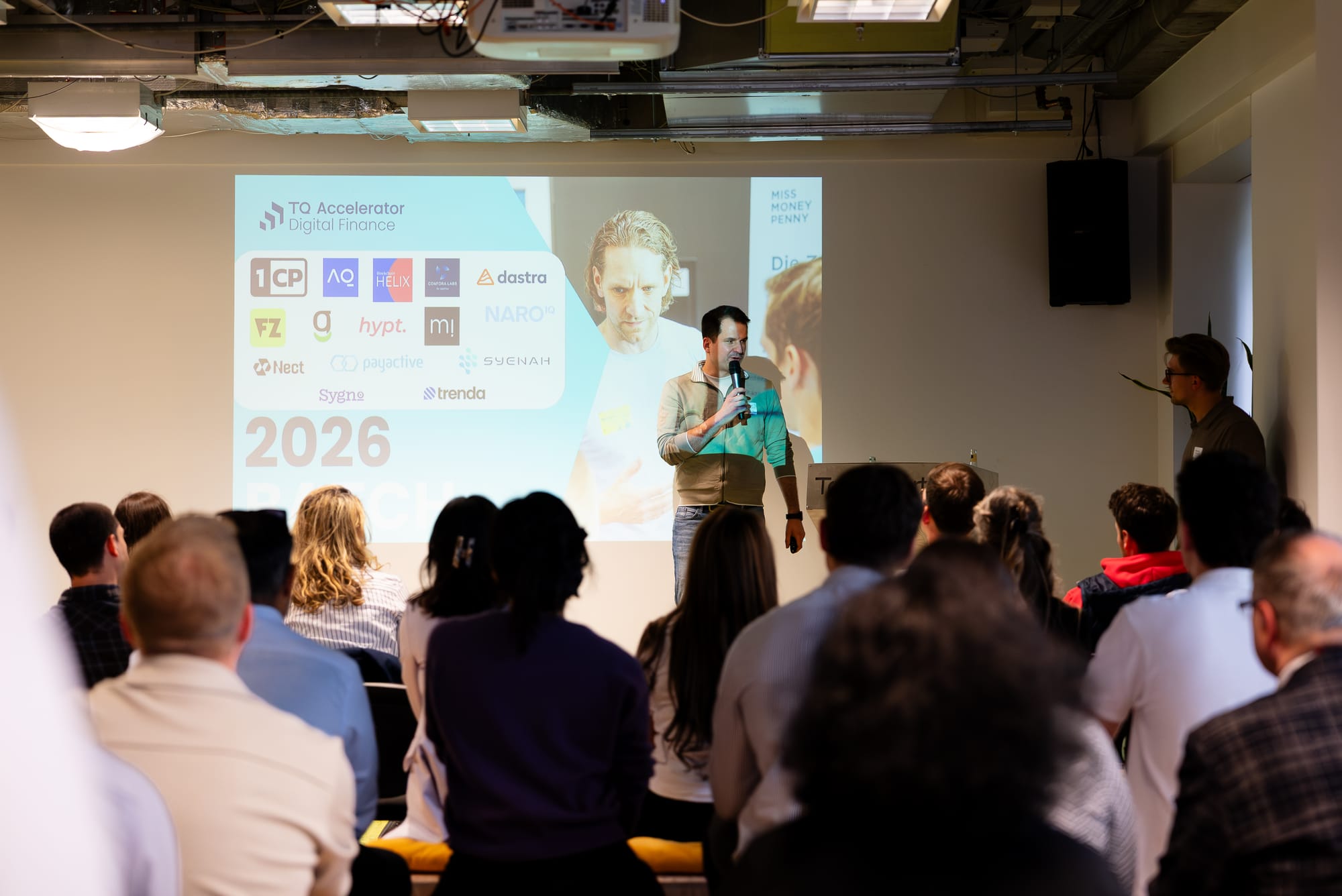
Three Accelerator Startups on Stage
Before the firesides, three startups from the current TQ Digital Finance Accelerator cohort pitched their concepts: Nect, hypt, and Finanz. Three different angles on the European fintech infrastructure layer, presented to a room of operators, investors, and peers.
The Day Before the Evening
The evening was the second half of a full day. Earlier, Miriam Wohlfarth and I structured a closed-door programme for the 15 startups in the third TQ Digital Finance Accelerator cohort, with four sessions covering the founder journey, the bank's perspective on working with startups, candid VC insights, and complex B2B sales. Our guests were René Maudrich (FastBill), Joerg-Christian Mentzel (Deutsche Bank), Clarisse Lam (TX Ventures), and Gijs Bos (Copla).
Networking
As always, the stage content is the setup. The real conversations happened over dinner and drinks, with the accelerator cohort, sponsors, and the Frankfurt fintech and banking community in the same room.
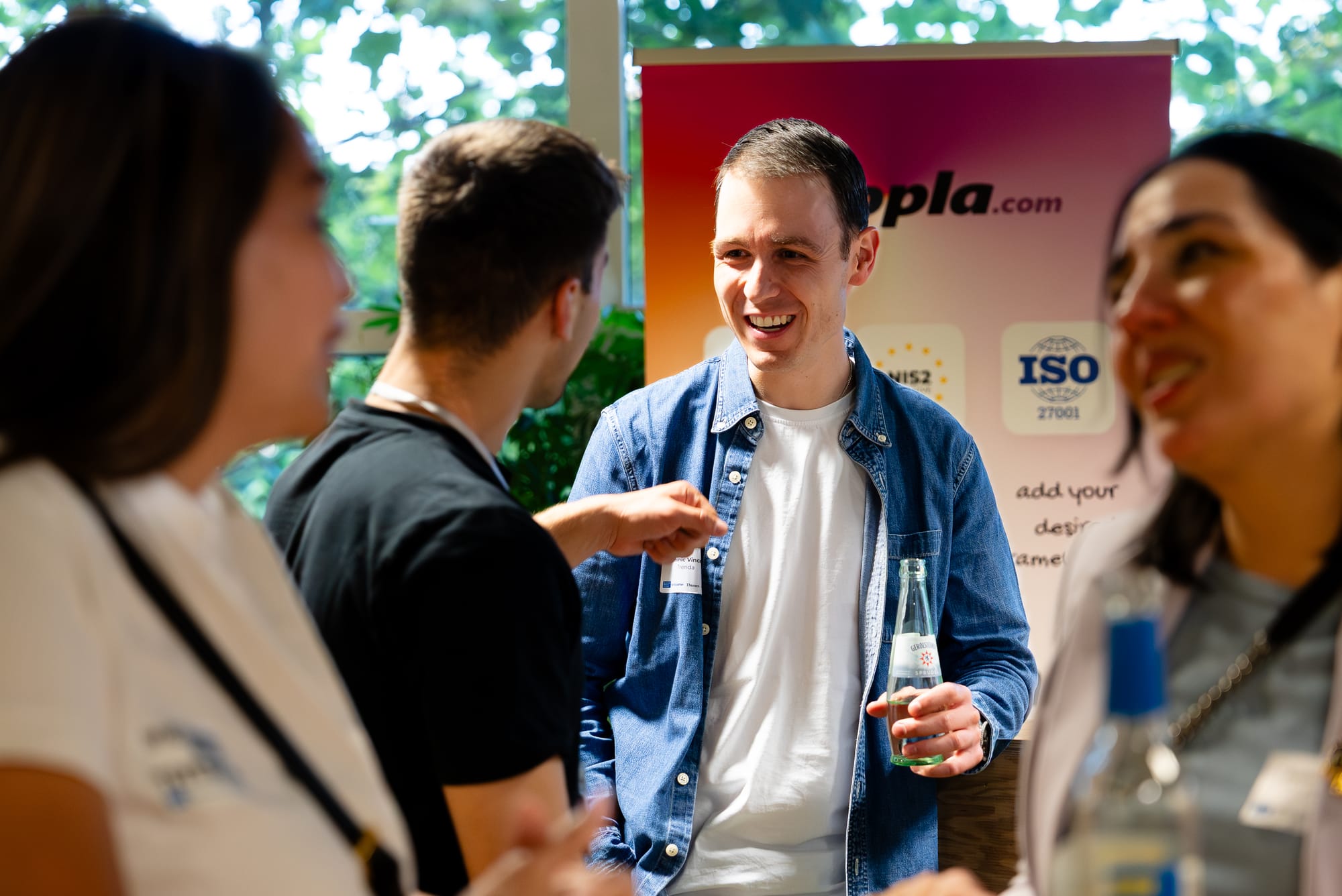
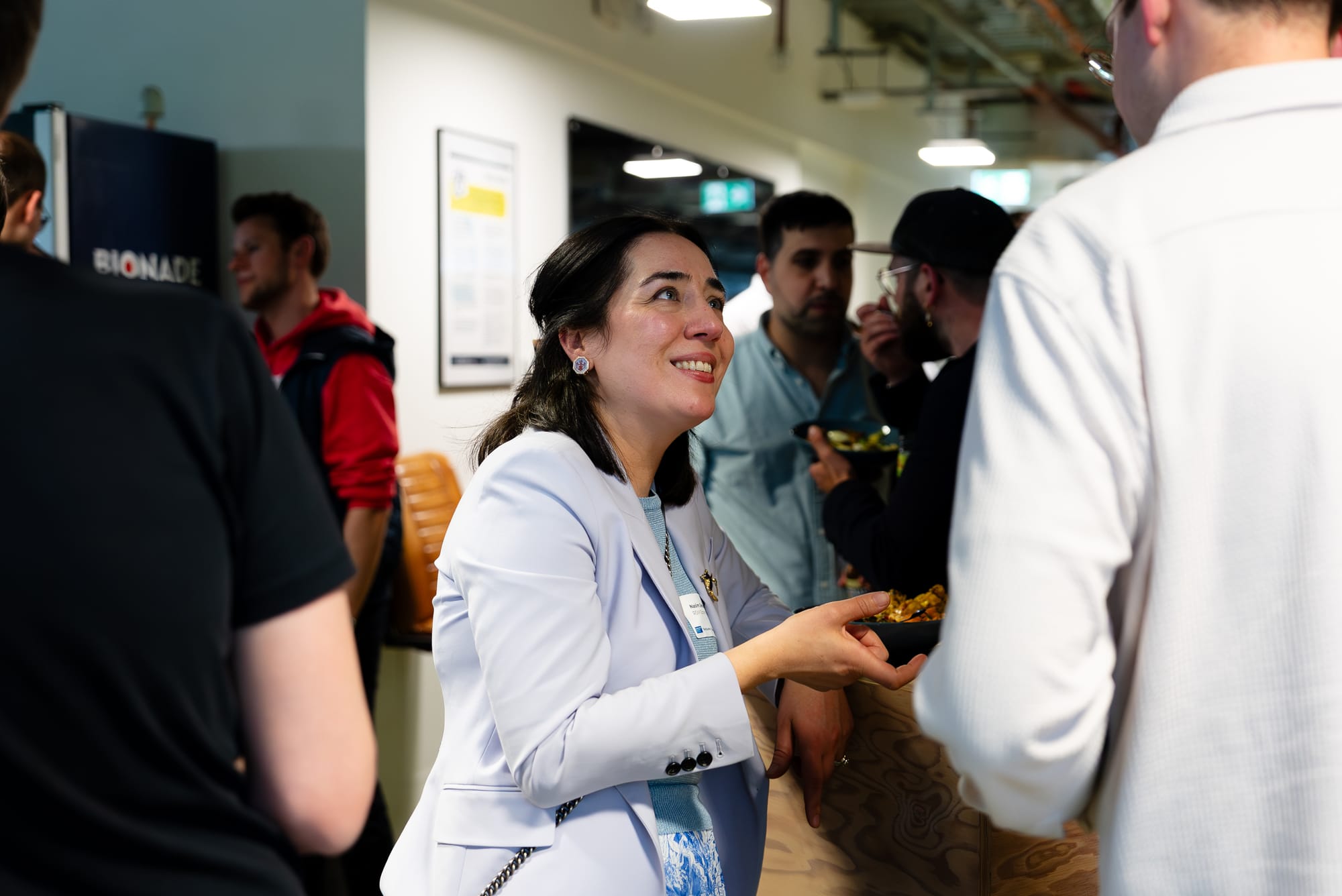
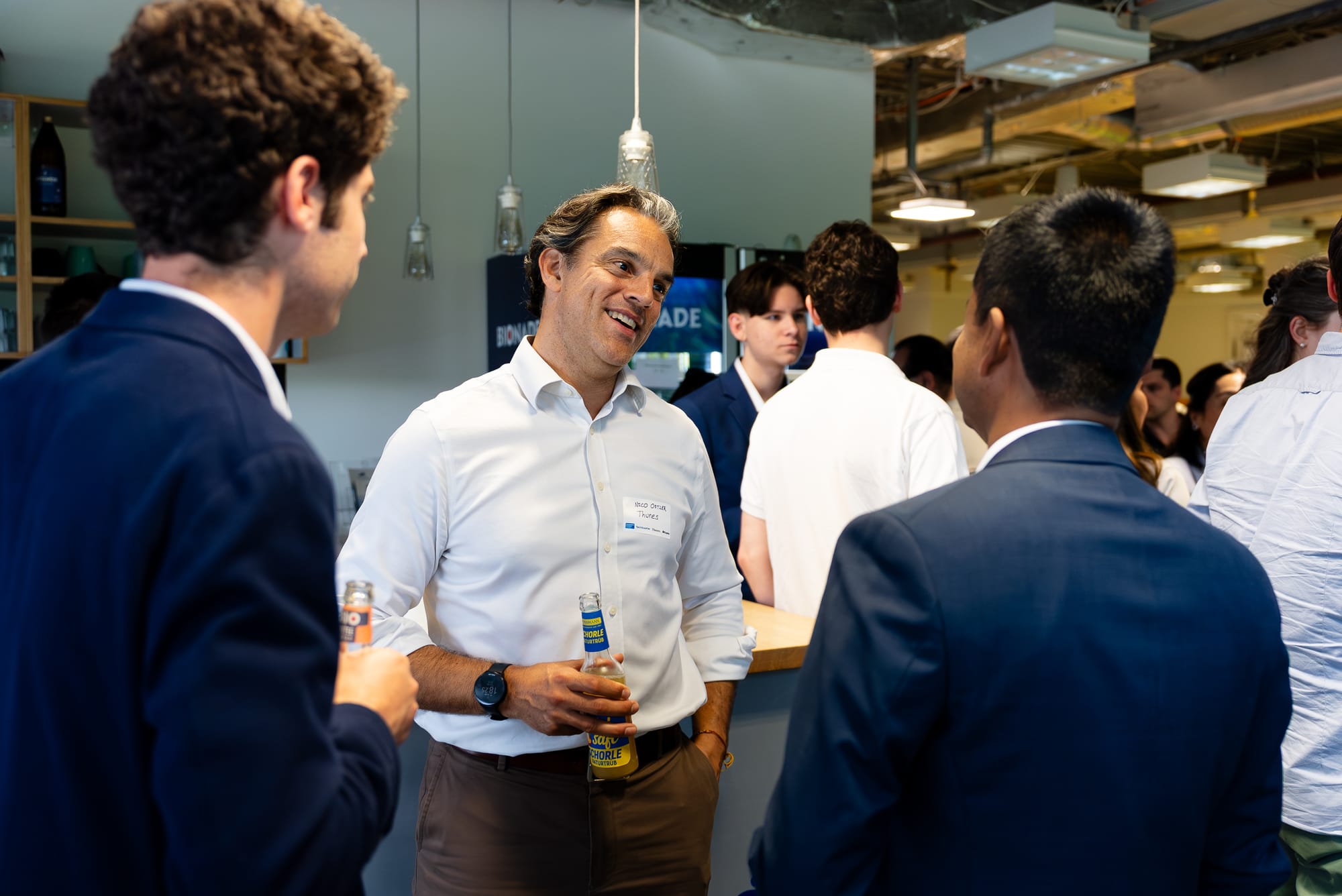

Thank you to everyone who came, and I hope to see you at Event #11.